


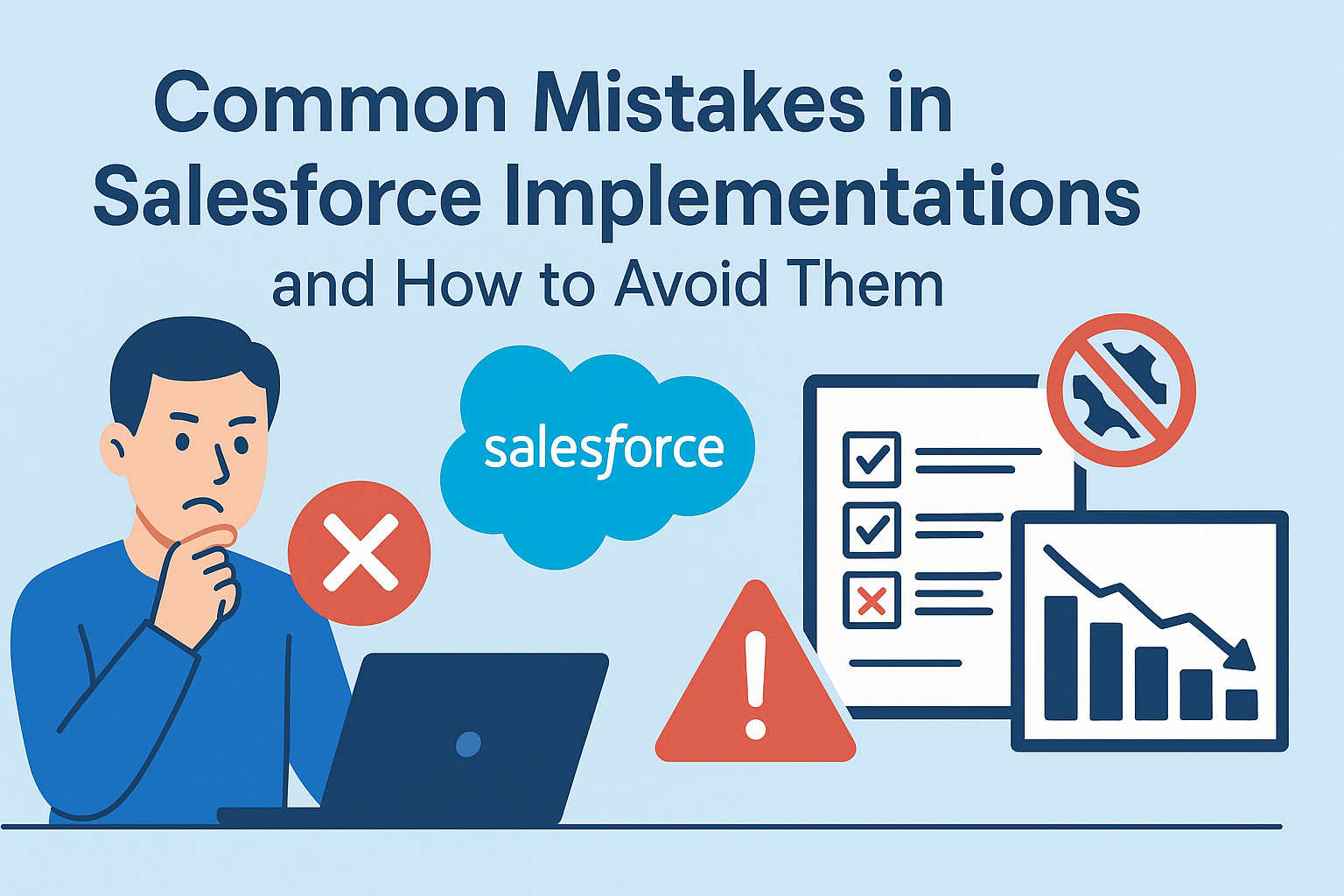
Salesforce has emerged as a cornerstone for businesses aiming to enhance customer relationship management (CRM). Its diverse functionalities, from sales and marketing automation to analytics and customer service, make it a go-to platform. However, the implementation process can be fraught with challenges. Organizations often stumble into common pitfalls that can derail the project. This article discusses these prevalent mistakes and outlines strategies to avoid them.
1. Inadequate Planning
The Mistake
Jumping straight into Salesforce implementation without a comprehensive strategy is a common blunder. Companies frequently underestimate the complexity of the system and overestimate their understanding.
How to Avoid It
Before implementation, invest time in drafting a detailed project plan. Identify key stakeholders, define objectives, and create a realistic timeline. Incorporating input from users at all levels will ensure the platform meets the needs of various departments.
2. Lack of User Adoption
The Mistake
A fantastic tool is of little use if the team isn’t using it correctly or at all. Resistance to change is a common phenomenon; employees may feel overwhelmed or simply prefer the old ways.
How to Avoid It
Promote a culture of adoption through training sessions and workshops. Show users how Salesforce can simplify their daily tasks and help them meet their goals. Incentivizing the use of the platform through gamification or rewards for champions can also boost engagement.
3. Underestimating Data Migration Challenges
The Mistake
Data migration can be complex. Organizations often underestimate the time and effort needed to transfer existing data into Salesforce correctly, leading to poorly organized data, which diminishes the platform’s effectiveness.
How to Avoid It
Conduct a thorough data audit before migration. Clean up any unnecessary information and establish a well-defined data mapping plan. Test the migration process with a small data set to understand potential challenges before executing the full migration.
4. Ignoring Customization Needs
The Mistake
Every organization has unique processes, but some firms try to fit their operations into Salesforce’s default settings without customization, resulting in a misalignment between business processes and the tool used.
How to Avoid It
Identify which aspects of Salesforce need customization to align with specific workflows. Work with consultants or Salesforce experts who can tailor the platform to meet your organization’s needs while keeping scalability in mind.
5. Not Leveraging Automation
The Mistake
Salesforce boasts numerous automation capabilities, yet many organizations fail to leverage them adequately. Manual processes continue to burden teams, leading to inefficiencies.
How to Avoid It
Take advantage of Salesforce’s automation features such as process builder, workflow rules, and flows to streamline repetitive tasks. This will lead to enhanced productivity and reduced errors.
6. Inadequate Training and Support
The Mistake
Sometimes companies skimp on training resources or offer one-size-fits-all sessions that don’t address the specific needs of teams.
How to Avoid It
Invest in tailored training programs that consider the different roles that users have within the organization. Continuous support, including regular refresher courses and access to resources can ensure users remain adept.
7. Poor Communication
The Mistake
Failing to maintain clear communication regarding the implementation process can lead to confusion and frustration among stakeholders.
How to Avoid It
Establish regular updates to communicate progress, milestones, and challenges. Create a feedback loop that allows users to voice concerns or suggestions throughout the implementation phase.
8. Ignoring Integration Needs
The Mistake
Salesforce is often part of a larger ecosystem, and neglecting how it integrates with existing tools can lead to data silos and inefficient processes.
How to Avoid It
Assess all the tools currently in use and identify those that require integration with Salesforce. Use APIs and connectors thoughtfully to ensure a seamless flow of information across systems, thus improving data accessibility and overall efficacy.
9. Failing to Utilize Reports and Analytics
The Mistake
Salesforce offers robust analytics features, but organizations often overlook the importance of data-driven decision-making, leaving valuable insights untapped.
How to Avoid It
Establish key performance indicators (KPIs) during the planning phase and ensure users are trained on how to utilize Salesforce’s reporting tools effectively. Regularly review metrics to inform strategic decisions.
10. Lack of Ongoing Evaluation
The Mistake
Organizations might consider the Salesforce implementation as a one-time project rather than an ongoing process. This is a mistake as business needs evolve over time.
How to Avoid It
Schedule regular evaluations and feedback sessions post-implementation. Continuously assess user satisfaction, system performance, and areas for improvement. Adapt the platform as necessary to accommodate changing business needs.
Conclusion
Successful Salesforce implementation is a complex endeavor that requires meticulous planning, user engagement, and ongoing evaluation. By understanding common pitfalls and proactively addressing them, organizations can ensure they maximize the potential of Salesforce as a powerful business tool.
FAQs
Q1: How long does a typical Salesforce implementation take?
A: The duration varies based on the project scope, size, and complexity. On average, it can take anywhere from a few weeks to several months.
Q2: What are the costs associated with Salesforce implementation?
A: Costs can include licenses, consulting fees, training, and ongoing maintenance. Budgeting adequately for all these aspects is crucial.
Q3: Can smaller organizations benefit from Salesforce?
A: Absolutely! Salesforce offers solutions tailored for small and mid-sized businesses, providing scalability and features that can help these organizations grow.
Q4: What is the best way to get executive buy-in for Salesforce implementation?
A: Present a clear business case that includes potential ROI, productivity improvements, and general benefits to both the organization and the users.
Q5: How often should I conduct training sessions for my team?
A: Initial training should be thorough, followed by refresher courses every few months or whenever notable updates or changes happen.
By being mindful of the common mistakes discussed and applying the suggested strategies, organizations can create a smoother implementation process and truly harness the capabilities of Salesforce.