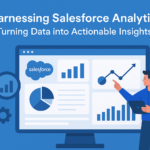
In today’s fast-paced business environment, data is the new oil. Companies generate vast amounts of it daily, but to be successful, they must learn to harness this treasure trove effectively. Salesforce Analytics, a part of the Salesforce ecosystem, offers robust tools that empower organizations to turn data into actionable insights. This article explores how to leverage Salesforce Analytics for your business needs, along with strategies to optimize data usage for decision-making.
Understanding Salesforce Analytics
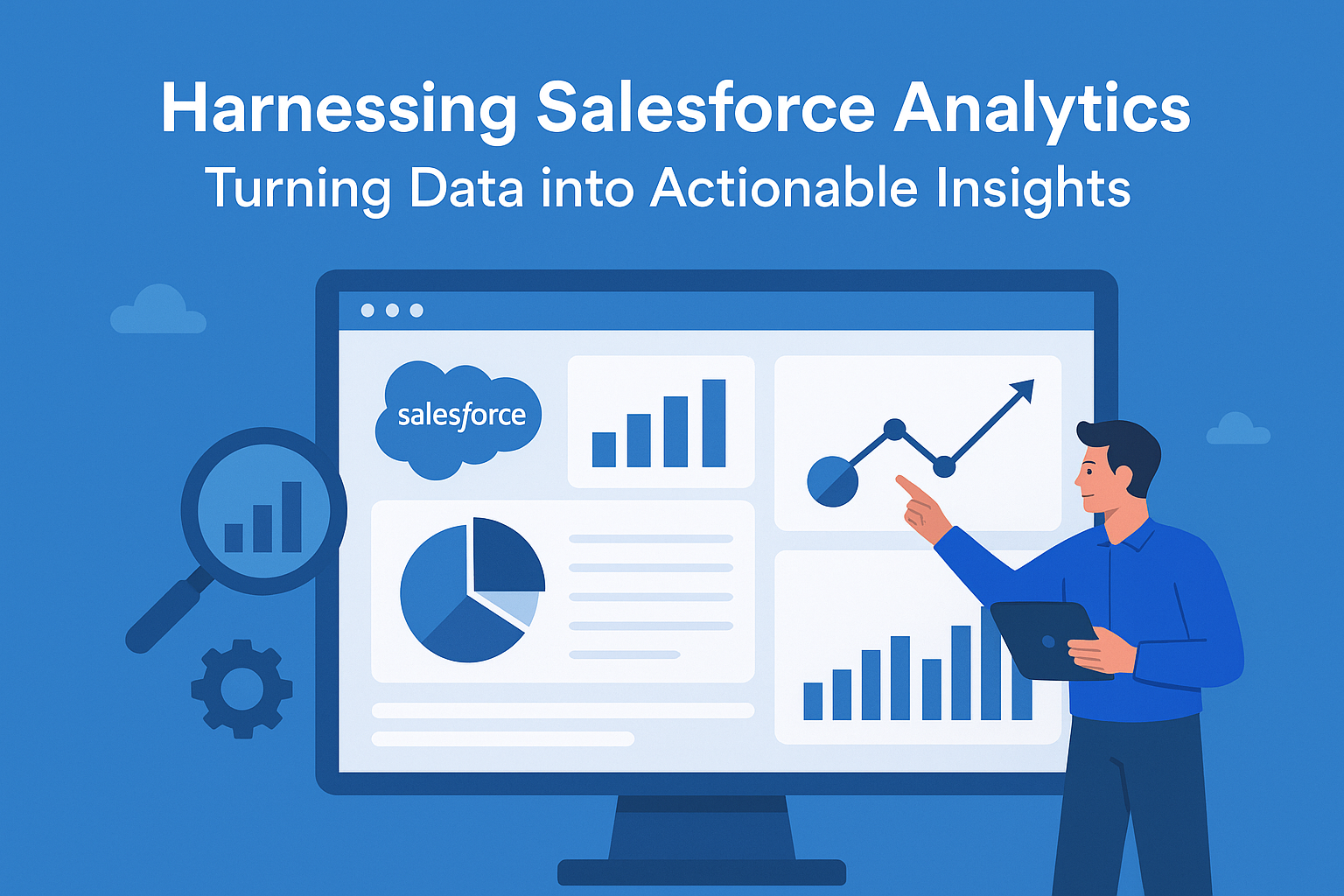
Salesforce Analytics encompasses a suite of tools designed to analyze customer data, streamline business processes, and enhance service delivery. At its core, it allows businesses to visualize data in real-time, facilitating deeper insights. The key components of Salesforce Analytics include:
-
Salesforce Reports and Dashboards: These are fundamental tools for tracking key performance indicators (KPIs) and providing visual summaries of data.
-
Einstein Analytics: This AI-powered analytics platform provides advanced capabilities, such as predictive analytics, that help businesses forecast trends and behaviors.
-
Tableau: Acquired by Salesforce, Tableau takes analytics a step further by enabling more sophisticated data visualizations and interactive dashboards.
Importance of Data in Decision-Making
Every business decision, from strategic planning to daily operations, should be backed by data. Here are some reasons why leveraging Salesforce Analytics is crucial:
-
Improved Customer Insights: Understanding customer preferences, behavior, and purchasing patterns helps businesses tailor their offerings, enhancing customer experience and loyalty.
-
Operational Efficiency: By analyzing process metrics, organizations can identify bottlenecks, optimize workflows, and reduce operational costs.
-
Sales Forecasting: Predictive analytics help businesses anticipate future sales trends, enabling more accurate inventory management and resource allocation.
-
Informed Strategy Development: Using historical data and market trends, companies can make data-driven decisions that align with their long-term strategy.
-
Competitive Advantage: Organizations that effectively harness analytics gain insights that their competitors may overlook, allowing for more agile responses to market changes.
Implementing Salesforce Analytics
To get the most out of Salesforce Analytics, a structured implementation plan is necessary. Here are some key steps:
1. Define Your Goals
Start by identifying the questions you want the data to answer. Are you looking to improve sales performance, enhance customer experience, or reduce churn? Clearly outlining your objectives will help focus your analytics efforts.
2. Data Integration
Ensure that all relevant data sources are integrated into Salesforce. This might include CRM data, marketing platforms, sales figures, and customer feedback. A single source of truth is essential for accurate analysis.
3. Create Meaningful Dashboards
Leverage Salesforce’s robust dashboard capabilities to create a visual representation of your KPIs. Customize your dashboards to suit different roles within your organization, allowing sales teams, marketing, and management to access the insights most relevant to them.
4. Use Predictive Analytics
With Einstein Analytics, businesses can employ machine learning algorithms to analyze past behaviors and predict future trends. Implement these insights for proactive decision-making rather than reactive measures.
5. Train Your Teams
Analytics is only as good as the people using it. Invest in training sessions for your employees so they can understand how to interpret the data and use the tools effectively.
6. Monitor and Adjust
Analytics is not a one-time effort. Continuously monitor the effectiveness of your strategies and adjust your approach based on newly discovered insights and changing business environments.
Turning Insights into Action
It’s not enough to simply collect and analyze data; organizations must be prepared to act on the insights gained. Here’s how to turn analytics into actionable strategies:
1. Challenge Assumptions
Use data to validate or challenge existing beliefs within your organization. If your sales team has historically seen a particular market as profitable, data insights may reveal otherwise. Encourage a culture of questioning and exploration.
2. Foster Collaboration
Encourage cross-functional teams to collaborate on insights gained from analytics. For instance, marketing teams can work with sales to ensure that promotional efforts align with customer preferences highlighted in the analytics.
3. Make Data-Driven Decisions
Empower decision-makers with the insights from Salesforce Analytics. Frame discussions and decisions around data to ensure that actions are guided by evidence.
4. Develop Quick Wins
Identify low-hanging fruit opportunities gleaned from analytics that can yield immediate benefits. Quick wins build momentum and encourage a data-driven culture within the organization.
5. Regularly Review Performance
Establish a routine of reviewing performance against your KPIs. This practice not only identifies areas for improvement but also reinforces the role of data in your organizational culture.
FAQs
What types of data can be analyzed using Salesforce Analytics?
Salesforce Analytics can analyze a variety of data types, including sales data, marketing metrics, customer interactions, financial performance, and operational metrics. The flexibility of the platform allows for integration with various data sources.
How can I ensure data quality in Salesforce?
To maintain data quality, implement regular data cleansing processes, automated validation rules, and consistent data entry practices. Training employees on data management best practices also plays a crucial role in maintaining quality.
Can Salesforce Analytics improve customer service?
Absolutely! By analyzing customer feedback, support tickets, and service interactions, organizations can identify trends and issues, allowing them to enhance service delivery and improve customer satisfaction.
How often should I review my analytics?
Regular review is crucial, but the frequency can depend on business needs. Monthly reviews are common for tracking performance against KPIs, while quarterly assessments can help with strategic planning and course corrections.
What are some limitations of Salesforce Analytics?
Some limitations include the complexity of setting up advanced analytics features for non-technical users, potential limitations in the breadth of data sources that can be integrated, and the need for ongoing training to ensure teams can effectively utilize the tools.
Conclusion
Salesforce Analytics is a powerful tool that can transform raw data into meaningful insights. By defining your goals, integrating data sources, creating dashboards, and fostering a culture of data-driven decision-making, your organization can leverage analytics for growth and improved operational efficiency. Embracing these tools will not only put data at the core of your strategic initiatives but also position your organization for long-term success in an increasingly data-driven world.